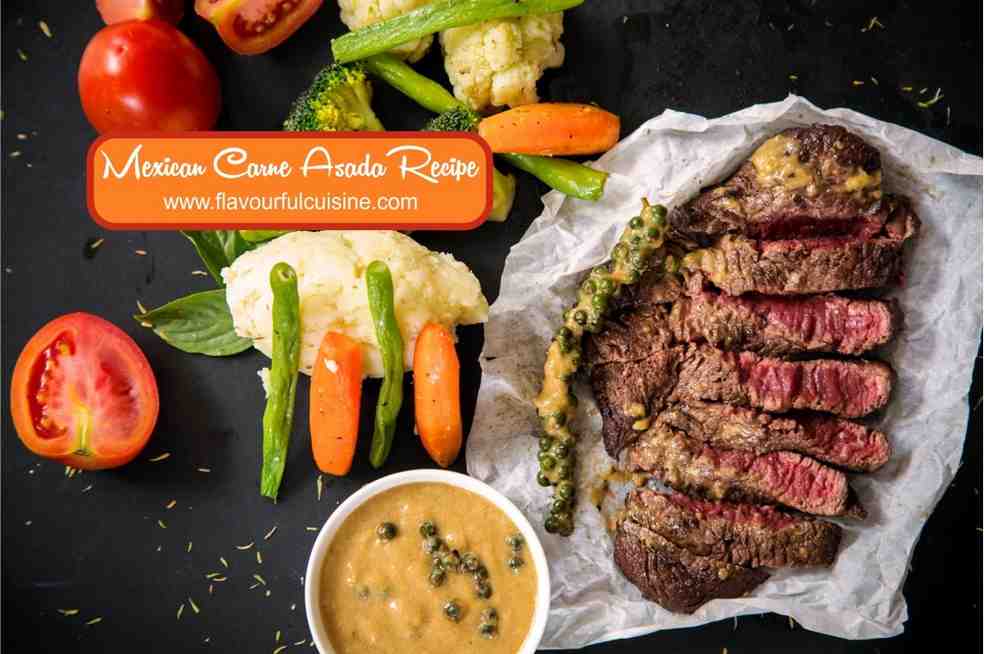

Mexican Carne Asada steak is one of those dishes that, the first time I tasted them, made me close my eyes for a moment. It was so delicious that I could feel every single flavour, and each bite was packed with incredible taste. That’s when I decided to make it at home myself.
I say this with full confidence: when you make this dish using my recipe, the aroma of garlic, lemon, orange, and that smoky fragrance will spread throughout your entire house. And the taste? It will be bold, tangy, and smoky exactly like the kind you’d enjoy at a restaurant.
Why This Recipe Is Different from Everything Else Out There
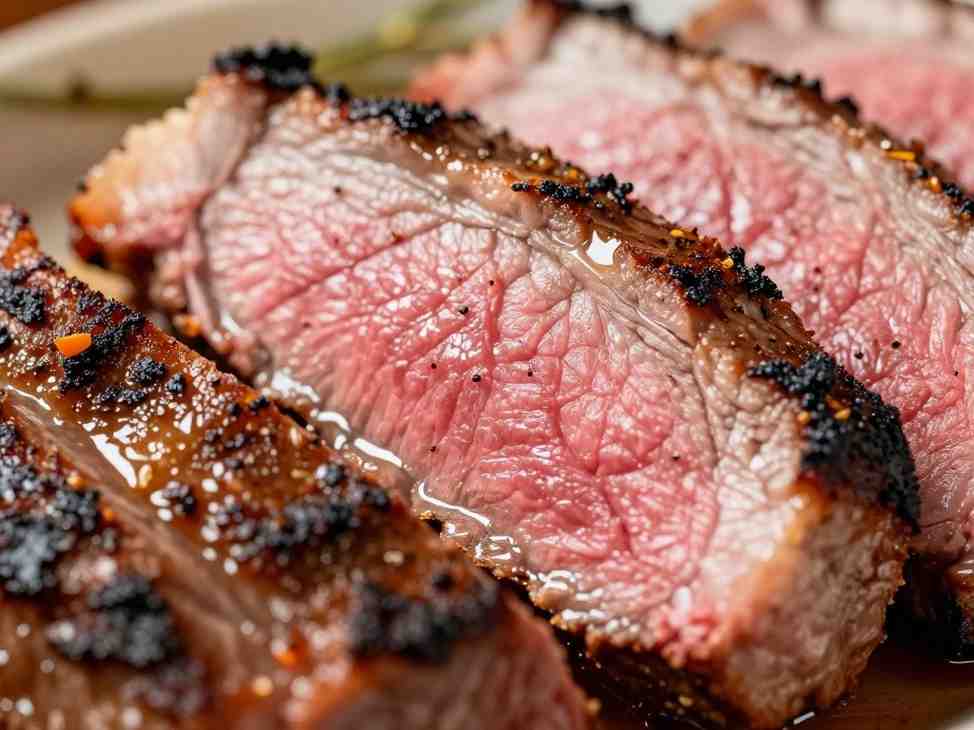
If you’ve Googled Carne Asada recipes, you’ve probably come across a dozen versions that all look similar. So why is this one worth your time?
First, in the Carne Asada steak marinade, lemon and orange are used both of which are citrus fruits that greatly enhance the flavor of the meat and make it tangy. Many people skip this step, but it makes a huge difference.
Second, instead of chilli powder, I use dry chillies and it makes a huge difference in the taste of Carne Asada. The authentic recipe always calls for dried chillies, not the store-bought chilli powder.
Third, this recipe teaches you the exact grilling technique that makes the difference between a dry, tough steak and one that’s incredibly juicy. The resting method I share is something home cooks almost always skip and it’s what separates a good Carne Asada from a great one.
Chef Bisma’s Personal Experience with Carne Asada
I remember it very well it was summer season, evening time, and I had just returned from a trip. That’s when I decided to make this recipe and try something different, because I have a great passion for cooking.
My first attempt? Honestly, it was a disaster. I used skirt steak without scoring it, marinated it for only 30 minutes, and cooked it on low heat because I was afraid of burning it. The result was a tough, pale piece of meat that smelt fine but tasted like a disappointment. My family was kind, but I could tell.
So I started researching. I spoke to Mexican home cooks, watched street vendors work their grills, and tested batch after batch in my kitchen over the following months. I learnt that the magic of Carne Asada is in three things: the marinade time, the cut of meat, and the heat of the grill.
Recipe Success Hacks: Everything I’ve Learned Over the Years
Speed Hacks
- Use a zip-lock bag for marinating.
- Score the meat with a sharp knife before marinating to help flavours penetrate faster.
- Use a cast iron skillet indoors if you don’t have a grill.
Budget Hacks
- Skirt steak and flank steak are both affordable and perfect for this recipe. Don’t feel pressured to buy expensive cuts.
- Buy your citrus in bulk when on sale — you can juice and freeze lime/orange juice in ice cube trays for future batches.
Ingredients Breakdown
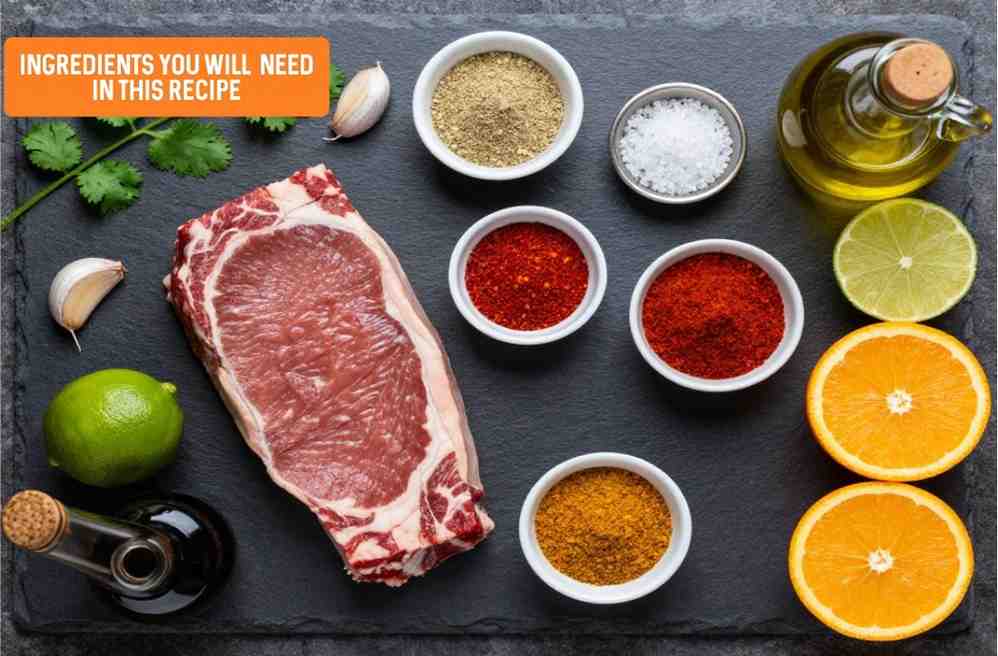
Here is everything you need for the marinade and the steak, with detailed notes on each ingredient:
For the Steak
- 1.5 lbs (680g) skirt steak or flank steak — The classic choice for Carne Asada. Thin, flavourful, and quick to cook. You can substitute with hanger steak or flat iron steak.
- 1 tsp salt — Enhances the overall flavor and helps with meat tenderization.
- 1/2 tsp black pepper — For basic seasoning. Freshly cracked is best.
- 1 tbsp olive oil — For coating the meat before grilling to prevent sticking. Any neutral oil works.
For the Carne Asada Marinade
- 1/4 cup fresh lime juice (about 3 limes) — The primary acid that tenderises the meat and gives that bright, tangy flavour.
- 1/4 cup fresh orange juice (about 1 large orange) — adds a subtle sweetness that balances the lime and rounds out the marinade.
- 4 cloves garlic, minced — Essential for depth. Use fresh; jarred garlic won’t give the same result.
- 1/4 cup fresh cilantro, chopped — Adds a herby freshness. If you dislike cilantro, substitute with flat-leaf parsley.
- 2 tbsp olive oil — Helps the marinade cling to the meat and adds richness.
- 1 tbsp soy sauce — My secret addition! Adds umami and helps with browning. Use tamari for gluten-free purposes.
- 1 tsp ground cumin — Earthy and warm, cumin is a cornerstone of Mexican spice blends.
- 1 tsp smoked paprika — Adds smoky flavour even if you’re not using a charcoal grill.
- 1/2 tsp ancho chili powder — Mild, slightly sweet dried chile. Adds authentic Mexican flavour without too much heat.
- 1/2 tsp guajillo chilli powder — Fruity and slightly tangy. Works beautifully with ancho. Substitute with regular chilli powder if unavailable.
- 1/2 tsp dried oregano (preferably Mexican oregano) — More citrussy and earthy than Italian oregano. A key flavour in authentic Carne Asada.
- 1/4 tsp cayenne pepper (optional) — Add if you want a little heat. Skip for a milder version.
- Zest of 1 lime — Intensifies the citrus flavour without adding more liquid.
Kitchen Tools Required
- Grill or Cast-Iron Skillet
- Sharp Chef’s Knife
- Cutting Board
- Mixing Bowl or Zip-Lock Bag
- Measuring Spoons and Cups
- Citrus Juicer
- Tongs
- Meat Thermometer (optional but helpful)
Step-by-Step Recipe Instructions
Step 1: Prepare the Carne Asada Marinade (5 minutes)
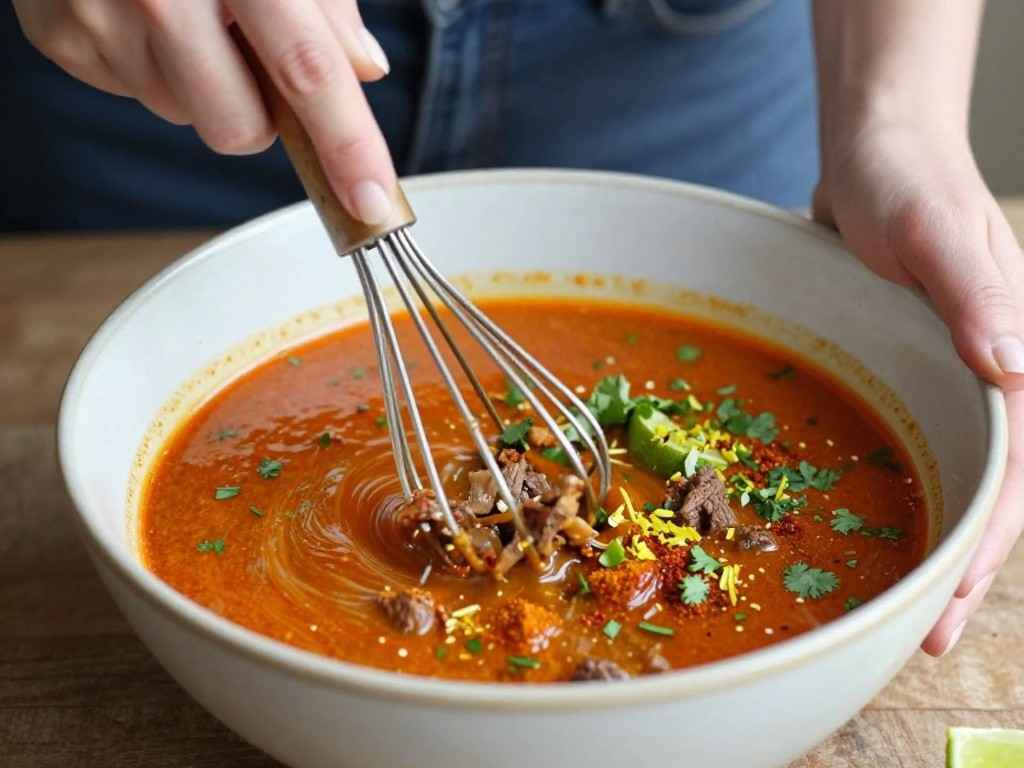
In a mixing bowl, combine the fresh lime juice, orange juice, minced garlic, chopped cilantro, olive oil, soy sauce, cumin, smoked paprika, ancho chilli powder, guajillo chili powder, dried oregano, cayenne (if using), and lime zest. Whisk everything together until well combined.
What to look for: The marinade should have a rich reddish-orange colour from the chilli powders and paprika. It should smell bright and citrussy with a warm, earthy spice undertone.
Chef Tip: Taste the marinade before adding the meat. It should taste bold and slightly salty — remember, it needs to flavour a large piece of meat, so a little strong is perfect.
Step 2: Prepare and Marinate the Steak (2 to 4+ hours)
Pat your skirt or flank steak dry with paper towels. This removes excess moisture and helps the marinade stick better. Using a sharp knife, lightly score both sides of the steak in a crosshatch pattern, making cuts about 1/4 inch deep. This is key for marinade penetration.
Place the steak in a zip-lock bag or shallow dish. Pour the marinade over the meat, making sure it’s completely coated. Seal the bag or cover the dish and refrigerate for at least 2 hours — ideally 4 to 8 hours. Overnight is even better.
Common Mistake: Don’t marinate for more than 24 hours. The citric acid will start to “cook” the meat, making the texture mushy.
Step 3: Bring Steak to Room Temperature (20–30 minutes)
Remove the steak from the refrigerator 20 to 30 minutes before cooking. This allows it to come to room temperature, which ensures it cooks evenly from edge to center.
While the steak rests, preheat your grill or cast iron skillet to HIGH heat. This step is non-negotiable. Low or medium heat will steam the meat rather than sear it, and you’ll lose that signature char.
Step 4: Grill the Carne Asada (8–12 minutes total)
Remove the steak from the marinade and shake off the excess (don’t wipe it completely). Brush lightly with olive oil. Place the steak directly over high heat.
For medium-rare (recommended): Cook for 3–4 minutes per side without moving it. Resist the urge to press down or flip repeatedly.
For medium: Cook 4–5 minutes per side.
What to look for: A deep brown-to-charred crust on each side. You should see grill marks and hear a consistent sizzle. If it’s not sizzling loudly, your grill isn’t hot enough.
Internal temperature guide: 130-135°F for medium-rare, 140-145°F for medium.
Common Mistake: Don’t crowd the grill pan. If cooking multiple pieces, work in batches.
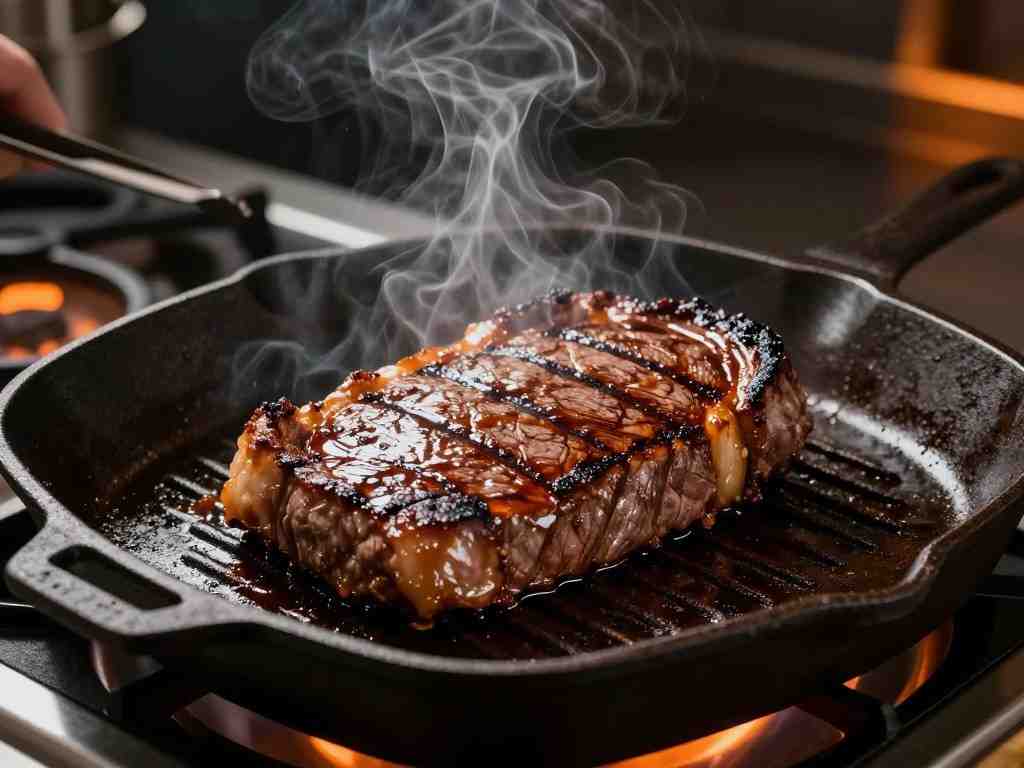
Step 5: Rest the Meat (5–10 minutes) — Do NOT Skip This
Transfer the cooked steak to a cutting board and cover it loosely with foil. Let it rest for at least 5 minutes, ideally 8–10 minutes.
Why this matters: Resting allows the juices to redistribute throughout the meat. Cut too soon and all that flavorful juice runs out onto your board instead of staying in the steak.
Step 6: Slice and Serve
Here’s the move that separates the pros from beginners: identify which direction the muscle fibers (the grain) run in your steak, then slice AGAINST that direction at a slight angle, cutting thin strips about 1/4 inch thick.
Cutting against the grain shortens the muscle fibers, making every bite significantly more tender. This is the single most important technique tip in this entire recipe.
Finish with a squeeze of fresh lime juice over the sliced meat and serve immediately.
Recipe Card
| Recipe Name | Mexican Carne Asada |
| Author | Chef Bisma |
| Cuisine | Mexican |
| Course | Main Course |
| Difficulty Level | Beginner to Intermediate |
| Preparation Time | 20 minutes (+ 2–4 hours marinating) |
| Cooking Time | 10–15 minutes |
| Total Time | 2 hours 30 minutes to 4 hours 35 minutes |
| Servings | 4 servings |
| Calories | ~320 kcal per serving |
Equipment: Grill or cast iron skillet, sharp knife, mixing bowl, tongs, cutting board
Main Ingredients: Skirt steak, lime juice, orange juice, garlic, cumin, smoked paprika, ancho & guajillo chili powder, cilantro, soy sauce
Nutrition Information (Per Serving)
Estimated values based on a 4-serving batch using skirt steak:
| Calories | ~320 kcal |
| Protein | ~35g |
| Carbohydrates | ~4g |
| Fat | ~18g |
| Fiber | ~1g |
| Sugar | ~2g |
| Sodium | ~480mg |
Note: Nutritional values are estimates and will vary based on specific ingredients and serving sizes used.
Serving Suggestions
Carne Asada is incredibly versatile. Here are some of my favorite ways to serve it:
- Carne Asada Tacos: Warm corn tortillas, diced white onion, fresh cilantro, salsa verde or pico de gallo, and a squeeze of lime.
- Rice Bowls: Serve sliced Carne Asada over cilantro lime rice with black beans, guacamole, and sour cream.
- Burritos: Wrap with rice, refried beans, cheese, and your favorite salsa.
- Loaded Nachos: Layer over tortilla chips with melted cheese, jalapeños, and salsa.
- Carne Asada Fries: A California classic — pile the sliced steak over crispy fries with guacamole and cotija cheese.
For drinks, a classic agua fresca (hibiscus or tamarind), a cold Mexican lager, or a simple lime-mint agua serve beautifully alongside this dish.
Storage and Reheating Guide
Refrigerator Storage
Store leftover Carne Asada in an airtight container with a spoonful of cooking juices or a light drizzle of olive oil to retain moisture. It keeps well in the fridge for up to 4 days.
Freezer Storage
For longer storage, slice the Carne Asada and place it in freezer-safe zip-lock bags, removing as much air as possible. It can be frozen for up to 3 months. Label with the date for easy tracking.
Reheating Methods
- Skillet (Best Method): Heat a cast iron skillet over medium-high heat. Add a tiny drizzle of oil and reheat the steak for 1–2 minutes per side. Don’t overcook.
- Microwave (Quick Method): Place sliced steak in a microwave-safe dish, add a splash of water or broth, cover with a damp paper towel, and microwave in 30-second intervals until warmed through.
- Oven: Wrap in foil with a small splash of beef broth and heat at 300°F (150°C) for 10–15 minutes.
Frequently Asked Questions (FAQs)
1. What cut of beef is best for Carne Asada?
Skirt steak is the most traditional and my personal favorite for this authentic Carne Asada recipe. Flank steak is a close second and slightly easier to find. Both are thin, flavorful cuts that absorb marinades beautifully and cook quickly over high heat. For a more budget-friendly option, flat iron steak also works very well.
2. How long should I marinate Carne Asada?
A minimum of 2 hours is needed for the flavors to penetrate the meat. 4 to 8 hours is ideal. Overnight marinating gives the deepest, most complex flavor. However, avoid marinating for more than 24 hours as the citric acid in the marinade will over-tenderize the meat and make the texture mushy.
3. What is the difference between skirt steak and flank steak?
Skirt steak comes from the plate section of the cow and has a stronger, more beefy flavor with a looser grain that absorbs marinades very well. Flank steak comes from the belly area, is slightly leaner, and has a tighter grain. Both are excellent for grilled Carne Asada; skirt is slightly more flavorful, flank is slightly leaner.
4. Can I cook Carne Asada in an oven or broiler?
Yes! If you can’t grill or don’t have a cast iron pan, use your oven’s broiler. Place the marinated steak on a broiler pan and broil on high for 4–5 minutes per side, keeping the steak close to the broiler element. Watch carefully to prevent burning.
5. Can I use this Carne Asada marinade for chicken or shrimp?
Yes! This marinade works beautifully on chicken thighs (marinate 2–4 hours) and shrimp (marinate 20–30 minutes only, as citrus “cooks” shrimp quickly). The cooking times will differ, but the flavor profile transfers wonderfully.
6. How do I know when Carne Asada is done cooking?
The most reliable method is a meat thermometer: 130–135°F for medium-rare, 140–145°F for medium. Visually, you should see a deep brown crust with slight char on both sides. When you press the center of the steak with your finger, medium-rare should feel slightly springy, while medium should feel firmer.
Final Thoughts from Chef Bisma
If there’s one recipe I’ll always come back to, it’s this one. Mexican carne asada is one of those dishes that feels celebratory every single time you make it — even on a Tuesday night. It brings people to the table, and it makes them stay.
If you’re making this for the first time, please don’t rush the marinade. That’s where the magic lives. Give it at least 4 hours, cook it hot and fast, rest it properly, and slice it thin against the grain. Follow those four things and I promise, you’ll make the best carne asada of your life.
I’d love to hear how it turns out! Drop a comment on the blog, share your photos on social media, and tag Flavourful Cuisine. Nothing makes me happier than seeing this recipe come to life in your kitchen.
Happy cooking! — Chef Bisma
Recipes that You’ll Love too: