

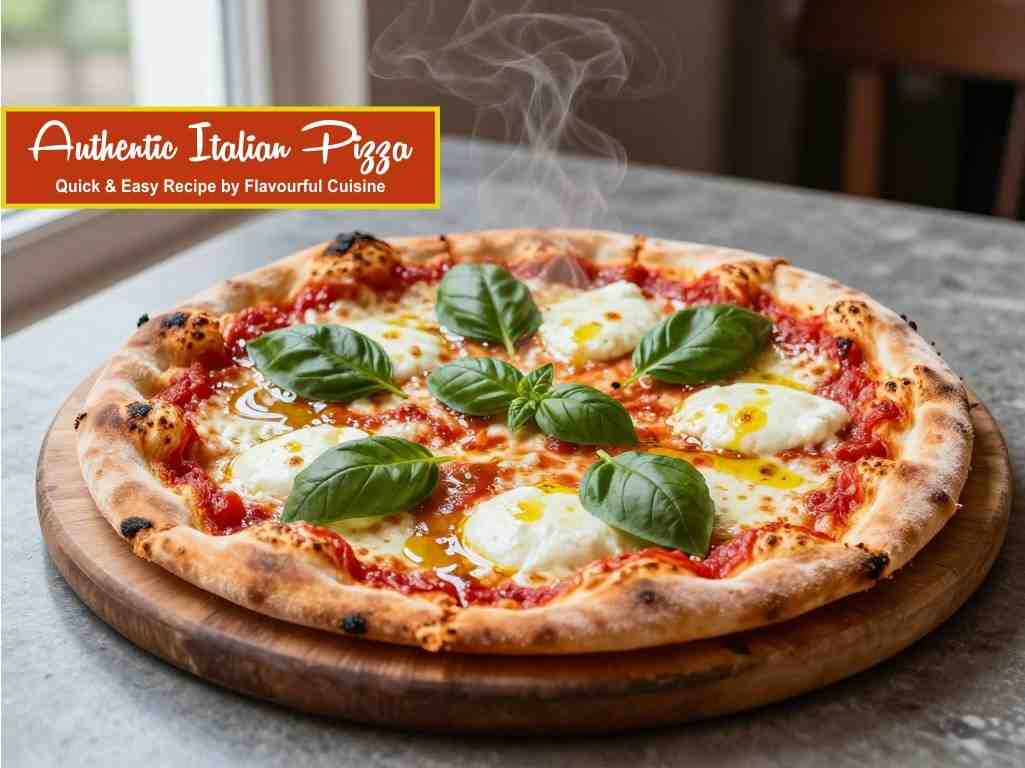
I was 19 when I tasted authentic Italian Pizza for the first time at a charming trattoria on a lively food street in Naples, Italy. The experience was unforgettable, and I instantly fell in love with its rich flavours. Over time, I discovered that a remarkable difference between pizza baked in an oven and pizza cooked in a traditional tandoor—the texture, aroma, and overall taste are completely unique.
Whether you are a complete beginner who has never touched a dough in your life, or a home cook looking to finally crack that crispy-base secret — this guide is for you. I am going to walk you through every single step, share what actually goes wrong (and why), and give you the kind of tips that usually only come from years of kitchen experience.
Why This Easy Italian Pizza Recipe Stands Out
You will find hundreds of pizza recipes online. Most of them either use premade bases, generic canned tomato paste, or skip the fermentation step entirely. The result? A dough that tastes bready rather than airy, a sauce that is too sweet or too sharp, and a pizza that just does not have that something.
Here is what makes this Authentic Italian Pizza recipe genuinely different:
- Cold fermentation technique — letting the dough rest in the fridge overnight builds complex flavour that a quick-rise just cannot replicate.
- San Marzano tomatoes — sweeter and less acidic than regular canned tomatoes, they are what professional pizza makers actually use.
- Minimal sauce cooking — the sauce goes on raw. Yes, raw. It cooks on the pizza and keeps its fresh, bright flavour.
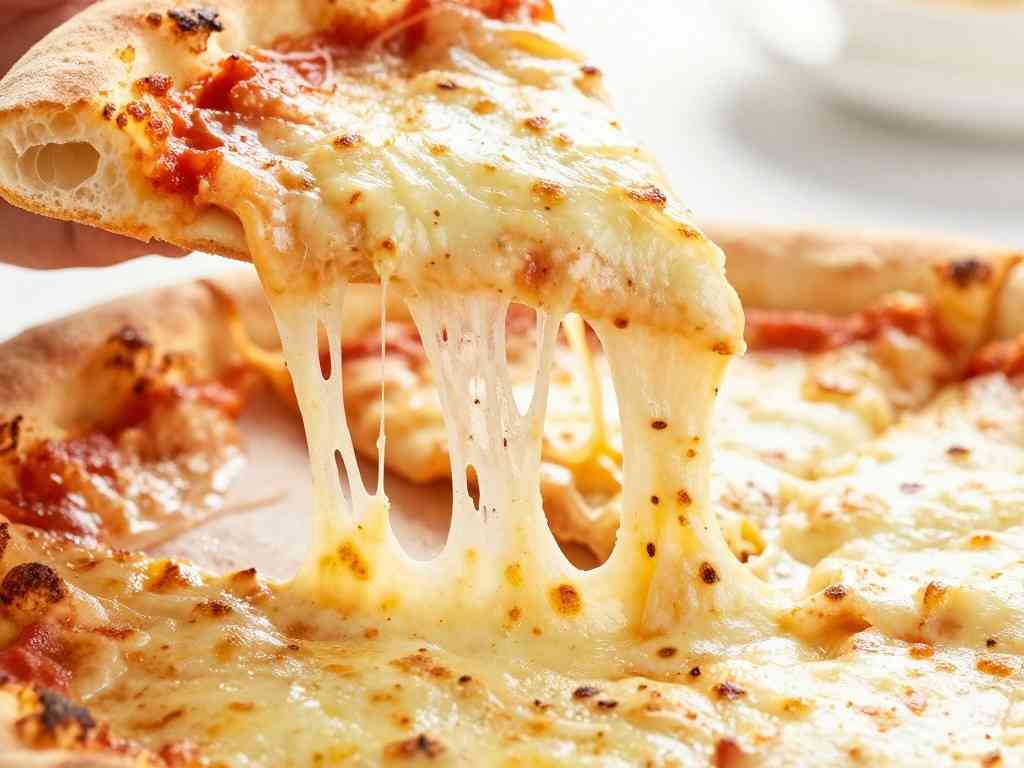
- Proper cheese placement — mozzarella goes on last so it does not overcook and turn rubbery.
- High heat baking — the secret to restaurant-style thin crust at home is a screaming hot oven and a preheated tray or stone.
Chef Bisma’s Personal Experience
I first tried to make Italian pizza at home when I was around twenty-two, fresh out of culinary school and absolutely convinced I had it all figured out. I used store-bought yeast, plain canned tomatoes, and processed mozzarella — and I could not understand why it tasted nothing like what I had eaten in Italy. The base was thick and doughy, the sauce was too sweet, and the cheese turned into a rubbery, greasy puddle.
My first big breakthrough came when I stopped rushing the dough. I left it in the fridge for twenty-four hours by accident — I had got distracted with other prep — and when I used it the next day, the flavour was completely different. Lighter, slightly tangy, more complex. I had stumbled onto cold fermentation without even knowing what it was.
The second game-changer was the tomato sauce. I stopped cooking it first. I blended San Marzano tomatoes with just olive oil, salt, and garlic, and spread it straight onto the base. The oven did the rest. The sauce came out tasting fresh and vibrant rather than jammy and flat.
Recipe Success Hacks
Speed Hacks
- If you are short on time, a 2-hour room-temperature rise works — though overnight is always better.
- Use a food processor to mix the dough in under 60 seconds.
- Pre-portion and freeze dough balls. Defrost in the fridge overnight — ready to use anytime.
Budget Hacks
- Skip expensive imported mozzarella — good quality local fresh mozzarella works perfectly.
- San Marzano tomatoes can be substituted with good-quality whole plum tomatoes.
- Drizzle extra virgin olive oil generously — it costs little but dramatically improves flavour.
Storage Hacks
- Store leftover slices in an airtight container in the fridge for up to 3 days.
- Unbaked dough balls can be frozen for up to 2 months. Wrap tightly in cling film.
- Leftover sauce keeps in a sealed jar in the fridge for up to 5 days.
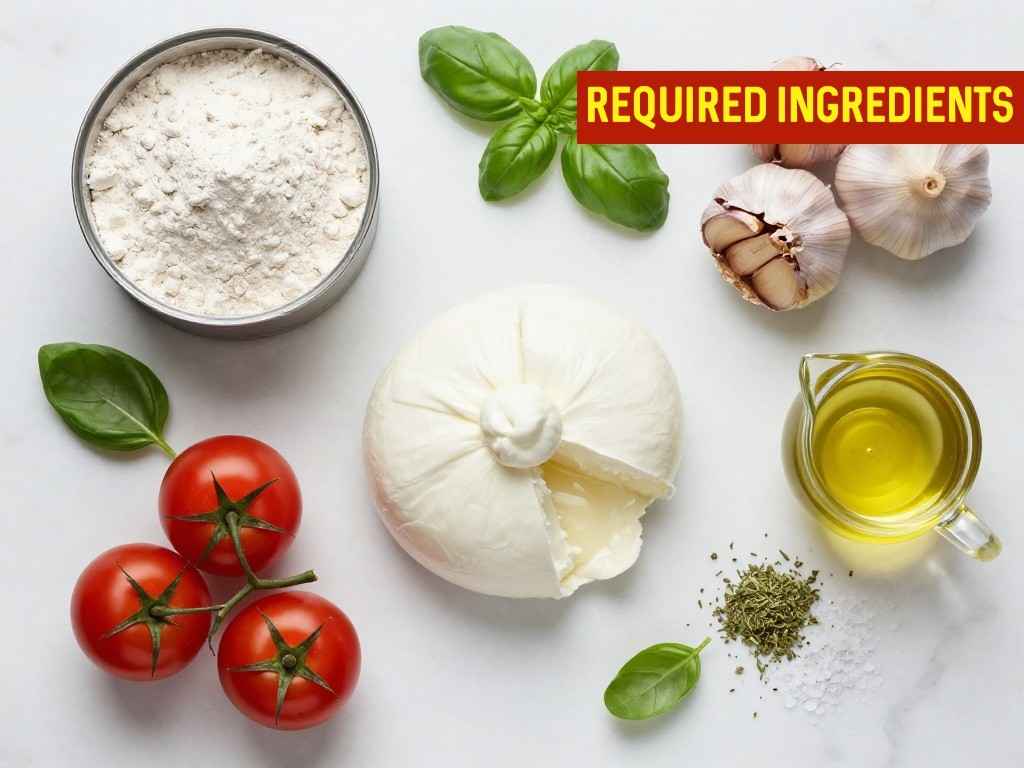
Ingredients Breakdown
For the Best Italian Pizza Dough:
- 3 cups (375g) all-purpose flour
- 1 tsp (4g) instant dry yeast
- 1 tsp (6g) fine sea salt
- 1 tbsp (15ml) extra virgin olive oil
- 1 tsp honey or sugar
- 1 cup (240ml) warm water
For the Authentic Pizza Sauce:
- 1 can (400g) San Marzano whole tomatoes
- 2 tbsp extra virgin olive oil
- 2 garlic cloves, minced
- 1/2 tsp fine sea salt
- 1/2 tsp dried oregano
- Pinch of sugar
For the Toppings (Classic Margherita):
- 200g fresh mozzarella, torn
- Fresh basil leaves
- Extra virgin olive oil for drizzling
- Freshly cracked black pepper
Kitchen Tools Required For Making Pizza
- Large mixing bowl
- Digital kitchen scale
- Rolling pin or your hands
- Baking tray or pizza stone
- Ladle or large spoon
- Wire cooling rack
- Sharp pizza cutter or large knife
Step-by-Step Recipe Instructions
Step 1: Make the Perfect Dough (10 minutes + rise time)
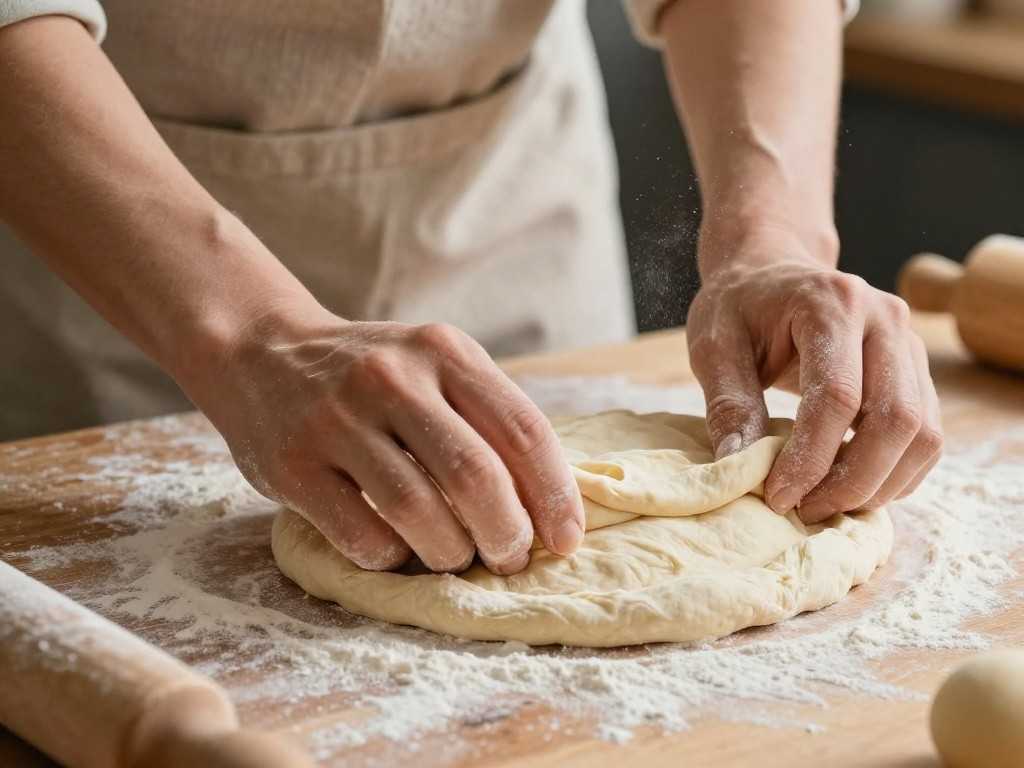
In a large mixing bowl, combine the flour, instant yeast, salt, and sugar. Mix briefly. Add the olive oil, then slowly pour in the warm water while mixing with your hand or a wooden spoon. Bring the dough together until it forms a rough ball.
Turn it out onto a lightly floured surface and knead for 8 to 10 minutes until the dough is smooth, elastic, and springs back when poked. It should not be sticky — if it is, add flour one tablespoon at a time.
Visual cue: The dough should be soft, slightly tacky, and pass the windowpane test (stretch a small piece — it should be thin enough to see light through without tearing).
Place in a lightly oiled bowl, cover with cling film or a damp cloth, and refrigerate for at least 8 hours or up to 48 hours. For a quick version, leave at room temperature for 1 to 2 hours until doubled.
Step 2: Make the Sauce (5 minutes)
Drain the canned tomatoes and crush them by hand into a bowl, or pulse briefly in a blender. Do not over-blend — you want texture, not a smooth puree.
Stir in the olive oil, minced garlic, salt, oregano, and pinch of sugar. Taste and adjust. The sauce should taste bright, slightly tangy, and well-seasoned. Do not cook it.
Step 3: Preheat Your Oven (15 minutes before baking)
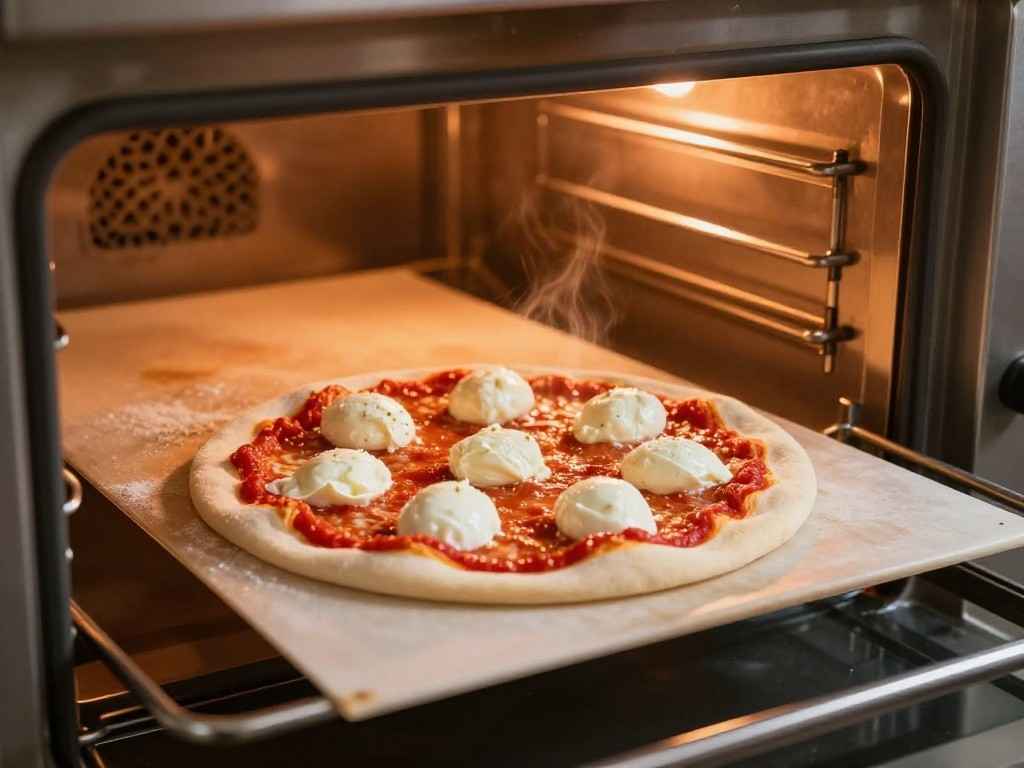
Set your oven to its highest temperature — ideally 250°C to 280°C (480°F to 540°F). Place your baking tray or pizza stone on the middle-upper rack and let it preheat for at least 20 minutes. A cold stone or tray is the number one cause of a soggy base.
Step 4: Shape the Dough
Divide the risen dough into two equal portions. On a lightly floured surface, flatten one ball with your palm. Using your fingertips, gently stretch the dough from the centre outward, rotating as you go. Aim for a circle about 25 to 28cm (10 to 11 inches) across, with edges slightly thicker than the centre.
Common mistake: Do not use a rolling pin if you want authentic texture. The pin knocks out the air and makes the crust flat. Use your hands.
Step 5: Assemble the Pizza
Transfer the shaped dough to a sheet of baking paper. Spoon 3 to 4 tablespoons of sauce onto the base and spread in circular motions with the back of a ladle, leaving a 2cm border around the edge.
Tear the fresh mozzarella into uneven pieces and scatter across the top. Less is more — you should still be able to see patches of sauce between the cheese.
Step 6: Bake (12 to 15 minutes)
Carefully slide the pizza (on the baking paper) onto the hot baking tray or stone. Bake for 12 to 15 minutes, until the crust is golden and slightly charred at the edges, and the cheese is bubbling and lightly golden.
Visual cue: The base should look crisp and dry underneath when you lift an edge slightly with a spatula.
Step 7: Finish and Serve
Remove from the oven and immediately scatter fresh basil leaves over the top. Drizzle with a generous amount of cold-pressed extra virgin olive oil and a few cracks of black pepper. Transfer to a wire rack for 2 minutes before cutting.
Recipe Card
| Recipe Name | Authentic Italian Pizza — Thin, Crispy & Loaded with Flavour |
| Cuisine | Italian |
| Difficulty Level | Easy to Intermediate |
| Preparation Time | 25 minutes (+ 1 hour dough rise) |
| Cooking Time | 12–15 minutes |
| Servings | 3–4 (two 10-inch pizzas) |
| Main Ingredients | All-purpose flour, yeast, San Marzano tomatoes, fresh mozzarella, olive oil, fresh basil |
| Calories | ~280 kcal |
| Protein | ~11 g |
| Carbohydrates | ~34 g |
| Fat | ~10 g |
| Fiber | ~2 g |
| Sugar | ~3 g |
| Sodium | ~520 mg |
Note: Nutrition values are estimates and will vary depending on exact ingredients and portion sizes used.
Serving Suggestions
This Cheesy and Creamy Italian Pizza is wonderfully satisfying on its own, but here are some ways to complete the meal:
- Serve with a simple rocket and shaved parmesan salad dressed with lemon juice and olive oil.
- A cold glass of still or sparkling lemonade pairs beautifully — as does a classic Italian Aperol Spritz for adults.
- Garlic dough balls or a side of bruschetta make perfect starters.
- For a dessert that fits the Italian theme, finish with a scoop of vanilla gelato or tiramisu.
Storage and Reheating Guide
Refrigerator: Store leftover slices in an airtight container for up to 3 days.
Freezer: Wrap individual slices tightly in cling film and freeze for up to 2 months. Unbaked dough balls can also be frozen for up to 2 months.
Reheating (Best Method): Place slices in a dry non-stick pan over medium heat, cover with a lid, and heat for 3 to 4 minutes. The base crisps up beautifully and the cheese melts without going rubbery.
Microwave (Quick Method): 30 seconds on high — convenient but the crust will be softer.
Oven Reheating: Place on a baking tray at 200°C (390°F) for 5 to 7 minutes.Shelf Life: Best eaten fresh within the first 2 days.

Frequently Asked Questions (FAQs)
1. Can I use all-purpose flour instead of bread flour?
Absolutely. All-purpose flour gives you that classic thin, slightly crispy crust that is characteristic of authentic Italian pizza.
2. Why does my pizza dough keep shrinking when I try to stretch it?
This is a very common issue and it means the gluten in your dough is too tight. The solution is simple: let the dough rest for 10 to 15 minutes after you take it out of the fridge, then try stretching again.
3. How do I prevent a soggy pizza base?
Three things: preheat your baking surface properly, do not use too much sauce, and do not overload the toppings.
4. Can I make the dough without yeast?
You can use a yeast-free dough with baking powder, but it will taste noticeably different — more like a flatbread than a proper pizza base.
5. What is the best cheese for Italian pizza?
Fresh fiordilatte mozzarella (cow’s milk) is the classic choice.
Final Thoughts from Chef Bisma
If there is one recipe I would recommend every home cook master, it is this one. Not because pizza is impressive — though it certainly is — but because learning to make a proper Italian pizza teaches you something fundamental about cooking: that quality ingredients, handled simply and with care, are always better than complexity.
Do not be intimidated by the dough. The first time you make it, it might not come out perfectly. The second time will be better. By the third, you will wonder how you ever bought a takeaway.
Take your time with the fermentation. Use good olive oil. Go easy on the toppings. Preheat that oven. And most importantly, enjoy the process — because cooking is always better when you are not rushing.
Happy cooking! — Chef Bisma
Recipes that You’ll Love too: