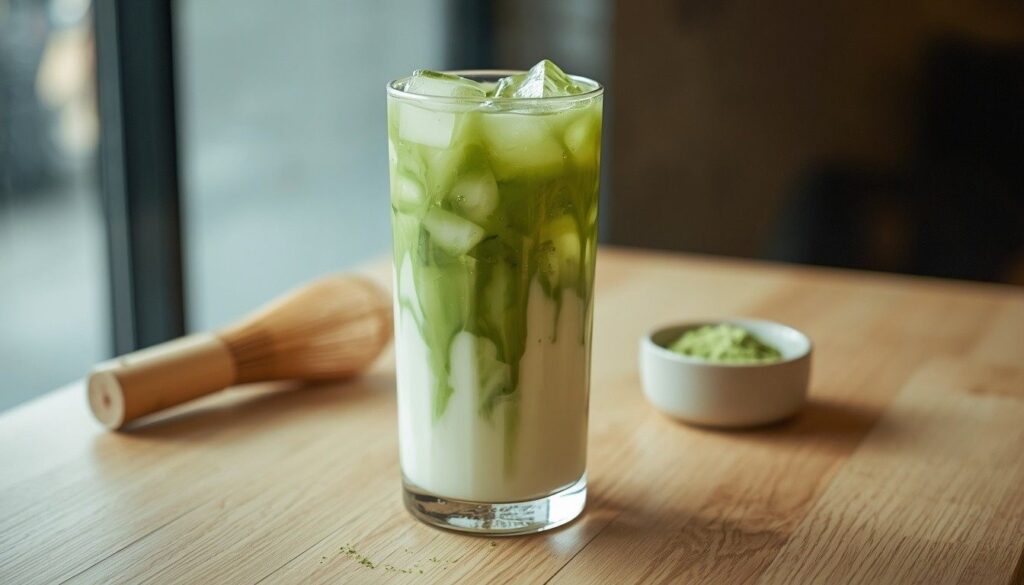

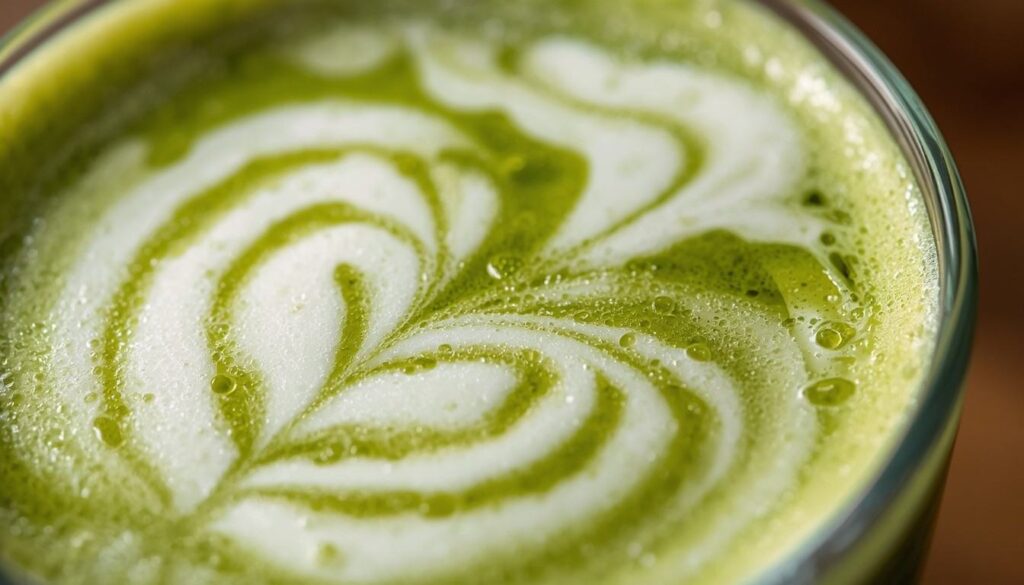
The first sip of a good matcha latte is earthy and grassy up front, gently sweet in the middle, and wrapped in silky milk. This Starbucks matcha latte recipe brings that café moment into your kitchen, minus the queue and the six-dollar receipt. The colour is a soft jade green, the aroma is fresh like cut grass after rain, and the texture is creamy without feeling heavy.
People love it because it feels like a treat but takes five minutes. Hot on a cold morning or poured over ice in summer, this is my go-to. If you have ever wondered why café matcha tastes so smooth while yours at home turns out gritty, the answer is in the method, and I will walk you through every detail.
What Makes This Matcha Latte So Good
Most copycat versions tell you to stir matcha into milk. I’ve tried that, and I’ve drunk the lumpy, bitter result. Mine is different in four ways.
- Paste first. The matcha is whisked into a smooth paste with warm water before any milk touches it.
- Dissolved sweetness. Sugar dissolves in that paste, which mimics Starbucks’ sweetened matcha blend and stops sweetness sinking to the bottom of an iced drink.
- Balanced flavour. The ratio keeps the tea flavour clear instead of hiding behind the milk.
- Simple ingredients. Everything comes from a regular supermarket, with swaps for every ingredient.
It is also flexible. The same paste works for a hot latte, an iced latte, or a creamy matcha latte made with oat milk, so you never need to learn a second recipe. Beginners can follow it without special equipment, and experienced home cooks will appreciate how easily the sweetness can be tuned.
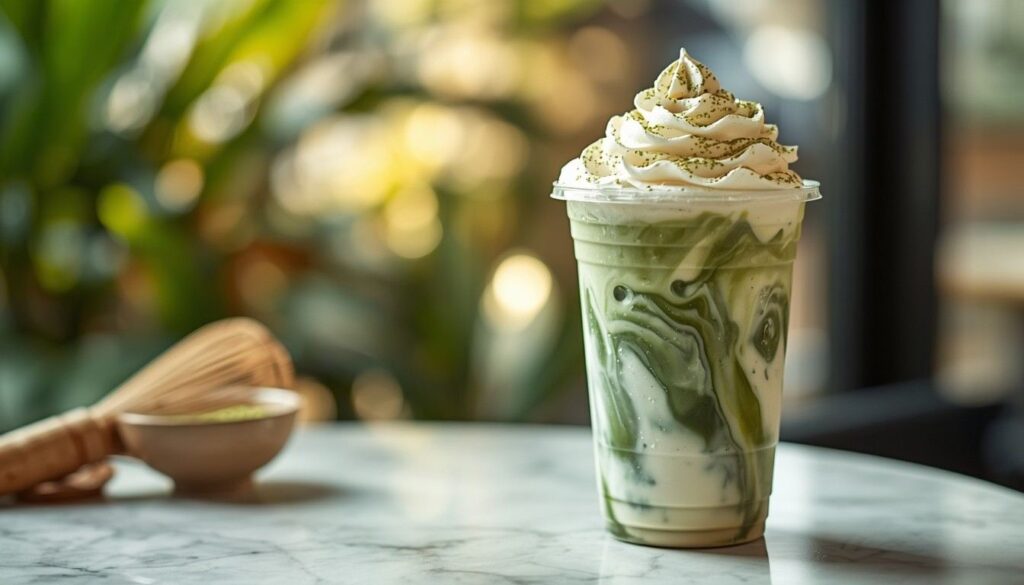
My Personal Tips for the Perfect Matcha Latte
I first made this about three years ago, when I realised my weekly café matcha habit cost more than my spice shopping. My first attempt was a disaster: cheap matcha stirred straight into cold milk with a spoon, leaving floating green lumps and a taste like boiled spinach.
Next came the water. I used boiling water, assuming hotter was better, and got a dull, bitter drink. A tea seller told me matcha prefers roughly 80°C, and that single tip changed everything.
After weeks of daily practice I learned that sifting matters, sweetness should be dissolved rather than sprinkled, and better matcha needs less sugar. When I finally poured a properly whisked latte for my family, my sister asked which café I had visited. That reaction made me stop experimenting and start writing things down. This version became my favourite because it tastes close to the café original while I control the sweetness. My fixes: sift for lumps, cooler water for bitterness, cold milk and big ice cubes for watery iced lattes, and more matcha, not less milk, for pale colour.
Recipe Success Hacks
Speed Hacks
Sift and measure matcha the night before, and use an electric kettle to reach 80°C fast. Keep a small jar of pre-mixed matcha and sugar by the stove, so mornings take under three minutes.
Budget Hacks
Buy a mid-range culinary matcha in a larger tin, and make your own sugar syrup instead of buying flavoured bottles. One tin easily makes twenty lattes, which brings each cup to a fraction of the café price.
Flavor Hacks
A tiny pinch of salt softens bitterness, and a few drops of vanilla add that café-style warmth. Chilling the glass beforehand keeps iced versions crisp.
Storage Hacks
Keep matcha in an airtight tin in the fridge, away from light, so it stays bright green. Oxygen and light dull the colour quickly, so reseal the tin every time.
Meal Prep Hacks
Batch a week of matcha paste in a jar and refrigerate; shake with milk each morning. You can also portion sugar into small jars for grab-and-go mornings.
Ingredients You’ll Need
This makes one 16 oz (grande-sized) latte. Measure the matcha with a level spoon, because a heaped teaspoon can easily push the flavour into bitter territory. Fresh, bright green powder always gives better results than dull, yellowish powder.
- Matcha powder, 2 tsp (4 g): Gives colour and flavour. Substitute: culinary-grade matcha, though ceremonial tastes smoother.
- Warm water, 3 tbsp (45 ml): Dissolves the powder. Note: never boiling, about 80°C is ideal.
- Sugar, 1½ tbsp: Mimics the café sweetness. Substitute: honey, maple syrup, vanilla syrup, or stevia to taste.
- Milk, 1 cup (240 ml): Adds creaminess; Starbucks uses 2%. Substitute: whole milk, oat, or almond milk.
- Vanilla extract, ¼ tsp: Optional warmth. Substitute: a spoon of vanilla syrup.
- Ice, 1 cup: For the iced version only. Use large cubes so it doesn’t dilute quickly.
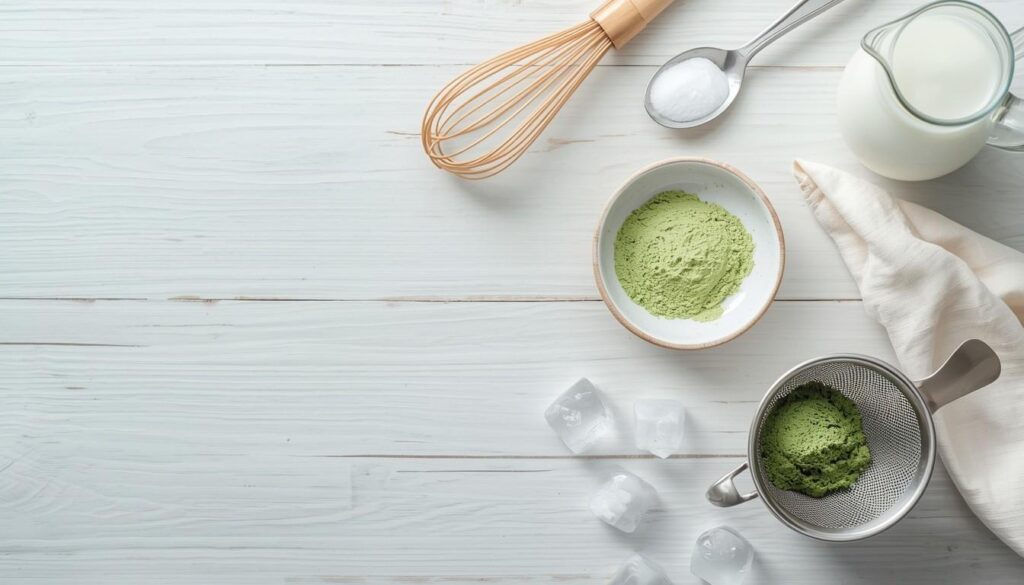
Kitchen Tools Required
- Fine sieve: Removes lumps. Alternative: a tea strainer.
- Small bowl: Holds the paste. Alternative: a small cup.
- Bamboo whisk (chasen): Blends smoothly. Alternative: a handheld frother or small fork.
- Small saucepan: Warms milk. Alternative: a microwave-safe jug.
- Tall glass: Serves the drink. Alternative: any large mug.
How to Make This Matcha Latte
Step 1: Sift the Matcha (1 minute)
Press 2 tsp matcha through a sieve into a dry bowl. You want a fluffy green heap with no pebbles. Mistake: skipping this, since clumps never whisk out. Tip: sift into a dry bowl, because humidity encourages clumping.
Step 2: Heat the Water (2 minutes)
Warm 3 tbsp water until it steams with tiny bubbles at the edge, about 80°C. Without a thermometer, boil it and wait two minutes. Mistake: boiling water, which burns the matcha and turns it bitter.
Step 3: Make the Matcha Paste (1 minute)
Add the sugar to the sifted matcha, pour in the warm water, and whisk in a quick zigzag for 30 seconds. Look for a glossy, deep-green paste with fine froth and no dry specks. Mistake: stirring in circles. Tip: scrape the bowl’s sides, and if you see stubborn specks, press them against the bowl with the whisk tines until they melt into the paste. This is the step that decides whether your latte feels café-smooth.
Step 4: Heat or Chill the Milk (2–3 minutes)
For hot, warm the milk over medium-low heat until steaming, about 65°C, with no skin forming. For iced, keep it cold. Mistake: boiling, which gives a cooked flavour. Tip: froth hot milk for 20 seconds for café foam.
Step 5: Combine (1 minute)
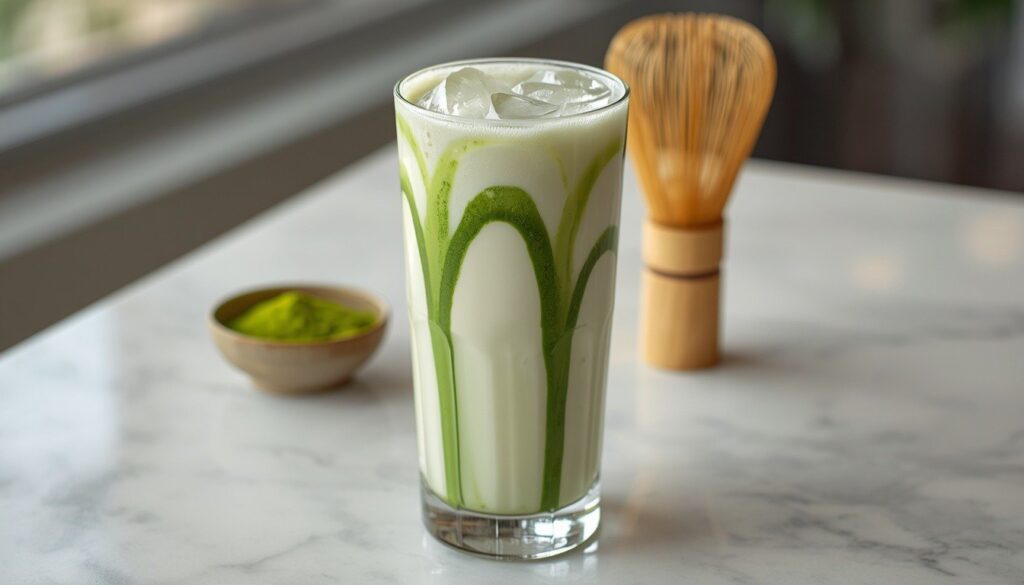
For hot, pour the paste into a mug, add milk slowly, and spoon foam on top. For iced, fill a glass with ice, add milk, then pour the paste over so it swirls into green ribbons. Mistake: adding ice last, which splashes and dilutes. Tip: stir once before sipping.
Step 6: Taste and Adjust (1 minute)
The colour should be soft jade green. If bitter, add 1 tsp syrup; if pale, whisk in ½ tsp more matcha paste. Mistake: adding sugar before tasting. Tip: taste with a clean spoon after the first stir, since flavours settle as the drink mixes. Serve immediately.
Recipe Card
| Recipe Name | Starbucks Matcha Latte (Hot or Iced) |
| Author | Chef Bisma |
| Cuisine | Japanese-inspired, American café |
| Course | Beverage |
| Difficulty Level | Easy |
| Preparation Time | 5 minutes |
| Cooking Time | 3 minutes |
| Total Time | 8 minutes |
| Servings | 1 (16 oz) |
| Calories | 205 kcal |
| Equipment | Sieve, bowl, whisk, saucepan, glass |
| Main Ingredients | Matcha, milk, sugar, warm water |
Nutrition Information
Estimated per serving, made with 2% milk and sugar:
| Calories | 205 kcal |
| Protein | 9 g |
| Carbohydrates | 31 g |
| Fat | 5 g |
| Fiber | 1 g |
| Sugar | 29 g |
| Sodium | 120 mg |
Serving Suggestions
Pair it with butter croissants, banana bread, or almond biscotti. For a fuller breakfast, serve it with avocado toast. A drizzle of honey or whipped cream on top makes it dessert-worthy. For summer gatherings, serve iced lattes with lemon shortbread or fresh berries, and a small pitcher of extra syrup so guests can adjust sweetness.
Storage and Reheating Guide
- Refrigerator: Drink fresh; a finished latte keeps 24 hours in the fridge, though it may separate.
- Freezer: Freeze matcha paste in ice cube trays for up to 2 months.
- Reheating: Warm gently on the stove or microwave in short bursts; never boil.
- Shelf life: Matcha paste lasts about 5 days chilled.
Frequently Asked Questions (FAQs)
Can I make this without a whisk?
Yes. A handheld frother or a jar with a tight lid works, shaking for 15 seconds.
Is culinary matcha okay?
Absolutely, though ceremonial gives a smoother, sweeter taste.
Why is my latte bitter?
Usually the water was too hot, or too much matcha was used.
Which milk works best?
Oat milk is closest to café creaminess; whole milk is richer.
Can I reduce the sugar?
Yes. Start with 2 tsp and adjust.
Does it contain caffeine?
Yes, roughly 60–70 mg per serving, less than a coffee.
Can I make it vegan?
Use plant milk and sugar or maple syrup.
Why does my matcha turn brown?
Old or oxidised powder; buy small tins and store them cold.
Can I make a stronger latte?
Add an extra half teaspoon of matcha and reduce the milk slightly, rather than adding more sugar.
Can I make this ahead for guests?
Prepare the paste in advance and keep it chilled, then combine with milk and ice just before serving.
Final Thoughts
This drink taught me that small techniques, sifting and gentle water, matter more than fancy ingredients. Try it once by the recipe, then make it yours. If it isn’t perfect the first time, don’t worry. Mine wasn’t either. Once you get the rhythm, you will make it without measuring. Stay patient with your first cup and enjoy the process.
Happy cooking! — Chef Bisma
Recipes that You’ll Love too: