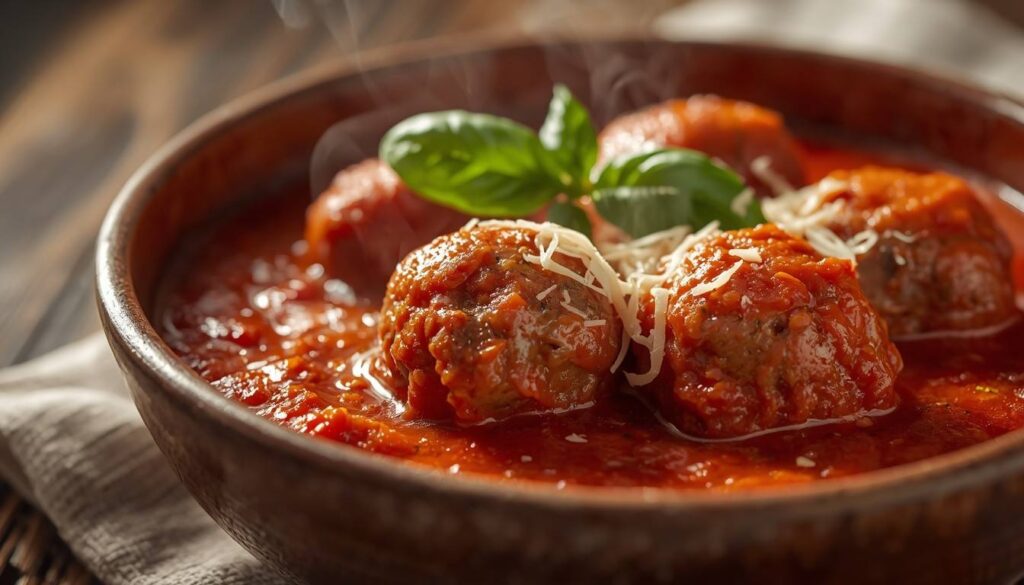

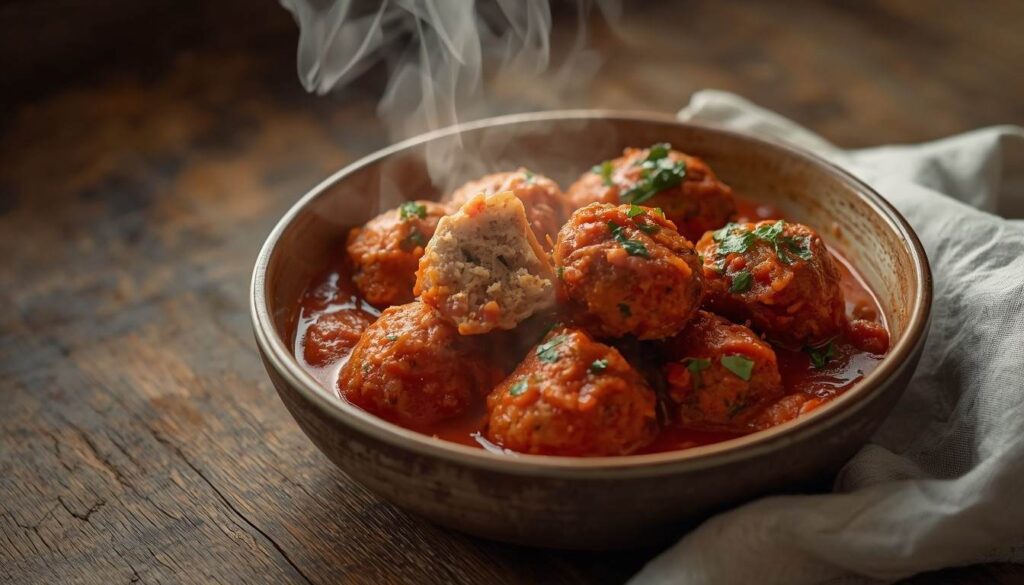
The Italian Meatballs in Tomato Sauce aroma alone is worth the effort. Onions and garlic softening in olive oil, tomatoes breaking down into something deep and velvety, a little basil torn in at the end — it is the smell of a home that feels cared for. And the texture is just as satisfying: the meatballs stay juicy and light rather than dense or rubbery, because of a few small techniques I will walk you through below.
If you have ever had a disappointing meatball — dry, bland, or falling apart in the pot — this recipe is going to change your mind about what a homemade Italian meatball can be. It is the kind of dish that makes a Tuesday night feel a little more special, and it is absolutely worth adding to your rotation of family dinner ideas.
What Makes Italian Meatballs So Speciel
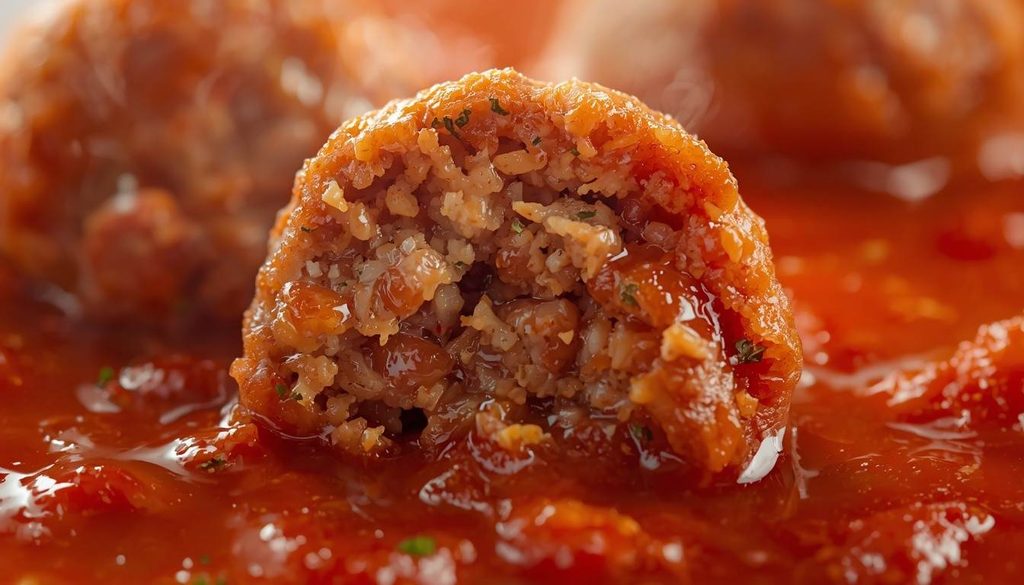
There is no shortage of meatball recipes online, so let me tell you exactly what sets this one apart. First, the meatball mixture uses a panade — bread soaked in milk rather than dry breadcrumbs — which is the real secret behind restaurant-style tenderness. Dry breadcrumbs soak up moisture from the meat as it cooks, and that is what leaves so many homemade meatballs dry and crumbly.
Second, I brown the meatballs before they ever touch the sauce, but only just enough to build a crust and lock in flavor, not to cook them through. They finish gently poaching in the tomato sauce itself, which means they absorb all of that garlicky, herby flavor from the inside out instead of just sitting on top of it.
A Little Note From My Kitchen
The first time I made Italian meatballs, I was maybe nineteen, cooking from a recipe I had scribbled down after watching an old cooking show rerun. I remember being so proud of how they looked going into the pan — and so disappointed by how they tasted. They were tough, a little dry, and honestly kind of flavorless in the middle. I had used plain breadcrumbs, overmixed the meat because I was nervous about the mixture holding together, and boiled the meatballs straight in the sauce from raw, which left the sauce watery and thin.
It took me a good number of attempts over the years — and a lot of notes scrawled in the margins of my recipe notebook — to figure out where I was going wrong. The turning point was the panade. The very first time I soaked torn bread in warm milk instead of using dry crumbs, I could feel the difference in the mixture itself; it was softer, almost creamy, and it held together without needing to be packed tight.
Recipe Success Hacks
Speed Hacks
- Use a small cookie scoop to portion meatballs quickly and evenly — it cuts rolling time nearly in half.
- Make the sauce while the meat mixture rests in the fridge for ten minutes; the flavors improve and you save time.
- Skip deep-frying the meatballs. A quick sear in a hot pan for two minutes per side is enough since they finish cooking in the sauce.
Flavor Hacks
- Add a small piece of parmesan rind to the simmering sauce and remove it before serving for a deep, savory background note.
- A pinch of sugar balances the natural acidity of canned tomatoes without making the sauce taste sweet.
- Finish the sauce with torn fresh basil off the heat so the herb stays bright instead of turning bitter.
Meal Prep Hacks
- Shape raw meatballs and freeze them on a tray before transferring to a bag — they can go straight from freezer to pan.
- Double the sauce recipe and freeze half in a flat bag for a fast weeknight dinner later on.
Ingredients Breakdown
For the Meatballs
| Ingredient | Amount |
| Ground beef (80/20) | 1 lb (450g) |
| Ground pork | 1/2 lb (225g) |
| White bread, torn | 2 slices |
| Whole milk | 1/2 cup |
| Parmesan cheese, grated | 1/2 cup |
| Egg | 1 large |
| Garlic, minced | 3 cloves |
| Fresh parsley, chopped | 3 tbsp |
| Salt | 1 tsp |
| Black pepper | 1/2 tsp |
| Olive oil | 2 tbsp |
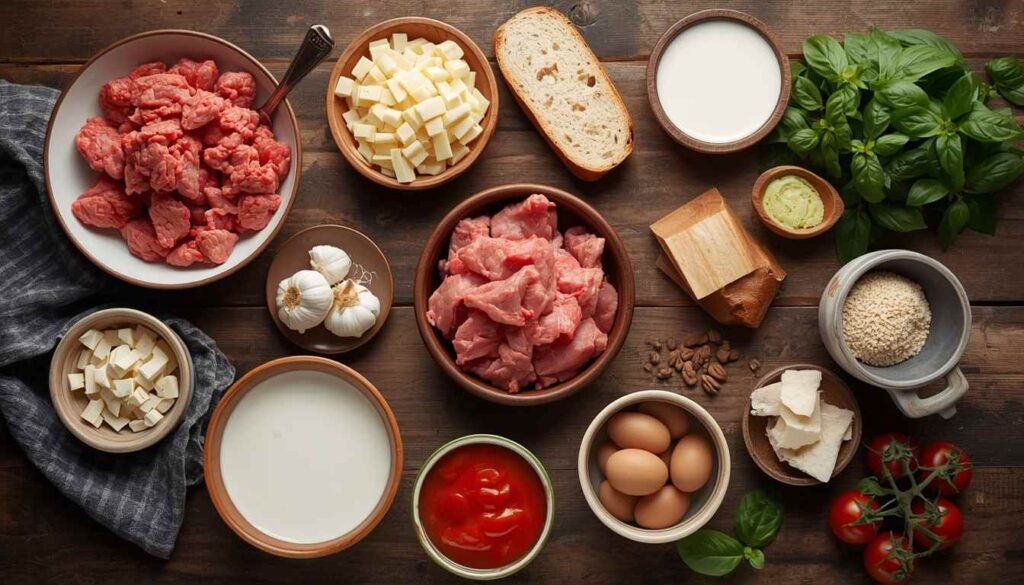
For the Tomato Sauce
| Ingredient | Amount |
| Olive oil | 2 tbsp |
| Yellow onion, diced | 1 medium |
| Garlic, minced | 4 cloves |
| Crushed tomatoes | 28 oz can |
| Tomato paste | 2 tbsp |
| Sugar | 1 tsp |
| Dried oregano | 1 tsp |
| Fresh basil leaves | 6-8 leaves |
| Salt and pepper | To taste |
| Parmesan rind (optional) | 1 piece |
Kitchen Tools Required
| Tool |
| Large mixing bowl |
| Cookie scoop |
| Heavy-bottomed skillet or Dutch oven |
| Wooden spoon |
| Box grater or microplane |
| Meat thermometer |
Easy Step-by-Step Guide
Step 1: Make the Panade
Tear the bread into small pieces and place it in a bowl with the milk. Let it sit for 5 minutes until fully softened and mashable. This takes only a few minutes but is the single most important step for tender meatballs. Visual cue: the bread should look like a soft, wet paste with no dry white centers left. Common mistake: skipping this step or using dry breadcrumbs instead — it is the main reason homemade meatballs turn out dense.
Step 2: Mix the Meatball Ingredients
In a large bowl, combine the beef, pork, soaked bread mixture, parmesan, egg, garlic, parsley, salt, and pepper. Using your hands, mix just until everything is evenly combined — about 30 seconds. Visual cue: the mixture should look uniform but still look loose, not tightly packed. Common mistake: overmixing, which activates the proteins in the meat and makes meatballs tough and springy instead of tender.
Step 3: Shape the Meatballs
Using a cookie scoop, portion the mixture into balls roughly the size of a golf ball (about 1.5 inches), rolling gently between your palms. You should get 16-18 meatballs. This takes about 8 minutes. Chef tip: keep a small bowl of water nearby to wet your hands, which prevents the mixture from sticking.
Step 4: Sear the Meatballs
Heat olive oil in a large skillet over medium-high heat. Working in batches, sear the meatballs for about 2 minutes per side, until browned on at least two sides. This takes about 8-10 minutes total. Visual cue: a deep golden-brown crust, not fully cooked through inside — that happens later in the sauce. Common mistake: crowding the pan, which steams the meatballs instead of browning them. Give them space and work in batches.
Step 5: Build the Sauce
In the same pan, add a touch more olive oil and sauté the diced onion over medium heat for 4-5 minutes until soft and translucent. Add the garlic and cook for 30 seconds until fragrant. Stir in the tomato paste and cook for 1 minute to deepen its flavor. Visual cue: the tomato paste should darken slightly and smell rich, almost caramelized. Common mistake: adding garlic too early or skipping the tomato paste step, both of which leave the sauce tasting flat.
Step 6: Simmer Everything Together
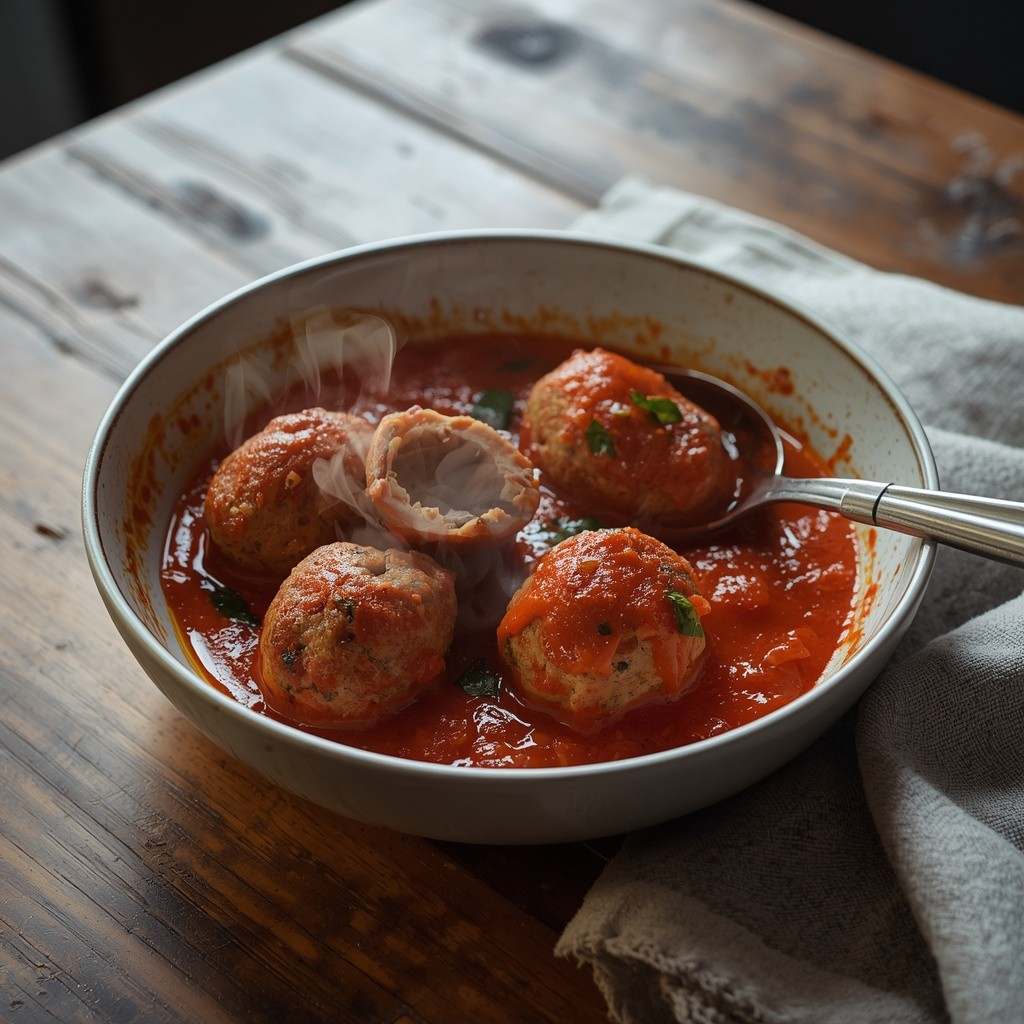
Pour in the crushed tomatoes, sugar, oregano, and parmesan rind if using. Bring to a gentle simmer, then nestle the seared meatballs into the sauce. Cover partially and simmer on low for 25-30 minutes, stirring gently and occasionally so the meatballs don’t stick. Visual cue: the sauce should thicken slightly and turn a deep brick-red color, and the meatballs should reach an internal temperature of 165°F. Common mistake: simmering at too high a heat, which can make the meatballs tough and cause the sauce to reduce unevenly.
Step 7: Finish and Serve
Remove the parmesan rind, stir in the torn fresh basil, and taste for seasoning, adjusting salt and pepper as needed. Let the pot rest off the heat for 5 minutes before serving — this allows the sauce to settle and cling better to pasta or bread. Chef tip: a light drizzle of good olive oil and a final grating of parmesan right before serving makes a noticeable difference.
Recipe Card
| Detail | Information |
| Recipe Name | Authentic Italian Meatballs in Tomato Sauce |
| Author | Chef Bisma |
| Cuisine | Italian |
| Course | Main Course / Dinner |
| Difficulty Level | Intermediate |
| Preparation Time | 25 minutes |
| Cooking Time | 40 minutes |
| Total Time | 1 hour 5 minutes |
| Servings | 4-5 people (about 17 meatballs) |
| Calories | ~410 kcal per serving |
| Equipment | Large skillet or Dutch oven, mixing bowl, cookie scoop |
| Main Ingredients | Ground beef, ground pork, parmesan, crushed tomatoes, garlic, basil |
Nutrition Information
Estimated values per serving (approximately 4 meatballs with sauce), based on 5 servings:
| Nutrient | Amount |
| Calories | 410 kcal |
| Protein | 27g |
| Carbohydrates | 16g |
| Fat | 27g |
| Fiber | 3g |
| Sugar | 7g |
| Sodium | 780mg |
Serving Suggestions
These meatballs are wonderful spooned over spaghetti or rigatoni with extra sauce and a generous shower of parmesan. For a lighter option, serve them over creamy polenta or alongside a simple arugula salad dressed with lemon and olive oil. Crusty garlic bread is practically mandatory for mopping up the sauce.
For drinks, a medium-bodied red wine like Chianti pairs beautifully with the tomato sauce, while sparkling water with a twist of lemon works well for a family-friendly, alcohol-free option.
Storage and Reheating Guide
- Refrigerator: Store in an airtight container, meatballs submerged in sauce, for up to 4 days.
- Freezer: Freeze in a freezer-safe container for up to 3 months; thaw overnight in the fridge before reheating.
- Reheating: Warm gently on the stovetop over low heat, covered, adding a splash of water if the sauce has thickened too much. Microwave reheating works too, in 60-second bursts, stirred between.
- Shelf Life: Best eaten within 4 days refrigerated for optimal texture and flavor.
FAQs
1. Can I make these meatballs without pork?
Yes, you can use all ground beef instead. The texture will be slightly leaner, but the panade and gentle mixing technique will still keep them tender.
2. Can I bake the meatballs instead of pan-searing them?
Absolutely. Bake at 400°F for 15-18 minutes on a lined tray, then transfer to the simmering sauce to finish cooking and absorb flavor.
3. Why did my meatballs fall apart in the sauce?
This usually happens if the mixture wasn’t bound well enough, often from skipping the egg or panade, or from simmering too vigorously. A gentle simmer keeps them intact.
4. Is this recipe freezer-friendly?
Very much so. Both cooked meatballs in sauce and raw shaped meatballs freeze well, making this a great meal-prep recipe.
5. What can I use instead of parmesan?
Pecorino Romano is a great substitute and adds a slightly sharper, saltier flavor to both the meatballs and the sauce.
6. How do I know when the meatballs are fully cooked?
Use a meat thermometer to check for an internal temperature of 165°F, or cut one in half to confirm there’s no pink remaining in the center.
7. What’s the best pasta to pair with this dish?
Spaghetti and rigatoni are classic choices, but pappardelle also works beautifully for holding onto the thick, hearty sauce.
Final Note
This recipe holds a special place in my kitchen, and I hope it finds a place in yours too. It took me years of small adjustments to land on a version that truly felt right, and I love that I get to hand you the shortcut version of that journey. Take your time with the panade, be gentle with your hands, and let the sauce simmer slowly — those three things make all the difference.
Whether you’re making this for a quiet weeknight dinner or a table full of family on a Sunday afternoon, I hope these meatballs bring the same warmth to your home that they’ve brought to mine. From my kitchen to yours, buon appetito!
Happy cooking! — Chef Bisma
Recipes that You’ll Love too: